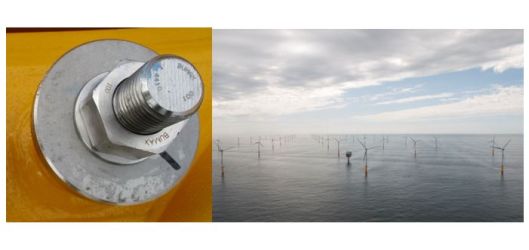
Lederer has added two material groups to its standard product range, 1.4462 and 1.4571, both offering high corrosion resistance and excellent mechanical strength.
The duplex grade 1.4462 (Duplex 2205) features an austenitic–ferritic microstructure, resulting in significantly higher mechanical strength compared with conventional stainless steels. Typical properties, such as a yield strength of ≥ 450 MPa and a tensile strength of 650–880 MPa, enable its use in highly stressed structures.
In addition, 1.4462 offers outstanding corrosion resistance, particularly against pitting and intergranular corrosion, as well as in chloride-containing environments, including offshore atmospheres and seawater exposure. This combination of strength and corrosion resistance makes the material ideal for demanding applications such as offshore and maritime structures, façade and load-bearing components in coastal areas, chemical and petrochemical plants and seawater desalination facilities.
Thanks to its good weldability and low thermal expansion, duplex steel is also well suited for precise, permanently stable bolted connections. Further advantages include excellent fatigue and wear resistance, as well as suitability for many applications at temperatures of up to approximately 250 °C.
Newly available products made from 1.4462 include hexagon bolts, threaded rods, nuts, washers, as well as fasteners manufactured in accordance with common standards (DIN, ANSI and JIS).
The titanium-stabilised stainless steel 1.4571 (A5 / 316Ti) has long been a standard material for chemically demanding and industrial environments. Due to its titanium stabilisation, the material remains resistant to intergranular corrosion even after welding, a key advantage for long-lasting structures.
1.4571 offers high resistance to chemical media, moderate chloride exposure and, in particular, SO₂-containing industrial atmospheres, such as those found in exhaust or process air environments. It is ideally suited for applications where maintenance and replacement are difficult, such as installed or hard-to-access components.
Typical areas of application include process and plant engineering, environmental and energy technology such as exhaust gas and wastewater systems, construction and architecture, the food and beverage industry, mechanical engineering, and, with certain limitations, shipbuilding where there is no direct contact with seawater.
1.4571 can be processed using almost all common welding methods (except gas welding) and features a stable austenitic structure. Although achieving a high-gloss polish is limited due to the titanium content, this does not affect its functional performance.
Newly available products made from 1.4571 include threaded rods, hexagon bolts, washers and spring washers.