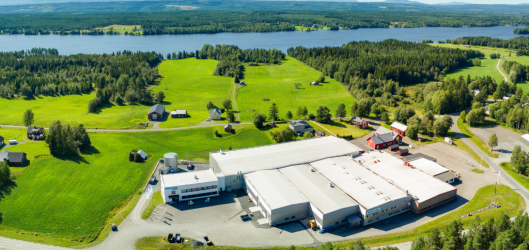
Nord-Lock has transitioned to biopropane, a renewable fuel produced from feedstocks, at its production facility in Mattmar, Sweden, reducing the site’s Scope 1 emissions by 99.9%.
According to the company, this has significantly lowered its CO₂e emissions from 190 tonnes per year to just 0.26 tonnes.
This transition forms part of the climate ambitions that all companies within the Nord-Lock Group have committed to through the Science Based Targets initiative (SBTi), which helps businesses set climate goals aligned with what science shows is necessary to limit global warming. As part of these commitments, Nord-Lock aims to reduce absolute Scope 1 and Scope 2 emissions by 58.8% by 2034 and achieve net-zero emissions by 2050.
The switch to biopropane is therefore a concrete and measurable contribution to these long-term goals. The company added that, as biopropane offers the same performance and reliability as previously used fuel sources but with a dramatically lower carbon footprint, Nord-Lock can maintain the same high quality and operational stability that customers depend on while significantly reducing greenhouse gas emissions.
“The transition to biopropane is a significant step in lowering our carbon footprint and a key milestone in reaching our sustainability goals. We are constantly seeking solutions that cut emissions while maintaining product performance. Achieving a 99.9% reduction in our factory’s Scope 1 emissions without impacting production is an excellent example of this approach,” said Graham Souter, Vice President BU Nord-Lock.
In addition to adopting biopropane, the facility is entirely powered by renewable electricity, predominantly hydropower, which further reduces its carbon footprint.
Anna Sjöberg, Nord-Lock Group Quality & Sustainability Manager, added: “The successful execution of our Mattmar facility's switch to biopropane is strong confirmation that Nord-Lock Group's sustainability roadmap is having a timely, positive impact on reducing emissions from our day-to-day operations and is delivering clear and meaningful results.”