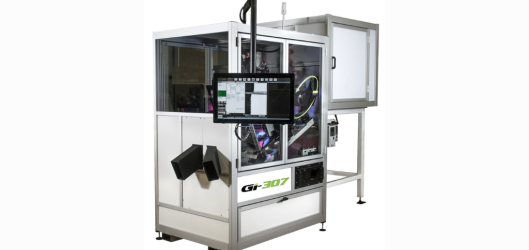
General Inspection has commissioned its GI-307 High-Speed Inspection System at four major fastener manufacturing facilities across the US.
The system is engineered to inspect a wide range of parts, including bolts, studs, pins and screws. Utilising a gravity-fed V-track system, the GI-307 incorporates multiple advanced features.
First, it offers full dimensional measurement. The system captures seven distinct profiles over 360 degrees to measure critical features such as length, diameter, threads, radii, angles, concentricity and straightness.
Second, it provides surface and visual defect detection. Integrated front lighting enables the identification of irregularities such as poor plating, dents, surface scratches and thread nicks.
Third, it includes specialised detection for missing, damaged or misplaced thread patches.
Additionally, the system offers recess and head analysis. Through its on-track vision station, it inspects each recess for defects such as Torx fill, chipped punches and missing recesses.
For structural and material integrity, optional stations utilise Super Eddy Current technology to verify the presence of heat treatment.
The system also features advanced crack detection, with a dedicated ten-camera station designed to identify cracks, seams and bursts on the outer diameter of bolt heads, hexes and flanges.
Bearing surface inspection is handled by a four-camera array that targets visual defects on bolt bearing surfaces.
According to the company, unlike traditional bowl feeders that require complex dial plates and lengthy downtime for changeovers, the GI-307 features a tool-less, rapid changeover process. Operators can switch between different parts—up to 35 mm in diameter and 150 mm in length—through a simple width adjustment.
“The GI-307 was designed for high-volume environments where uptime is the most critical metric,” said a spokesperson for General Inspection. “By utilising proprietary, menu-driven software, operators can quickly input print dimensions and tolerances, significantly reducing the risk of human error during setup.”